
Starting a business in the United States is often seen as a land-of-opportunity moment for new entrepreneurs. However, behind the excitement lies a complex legal, tax, and compliance landscape that can quickly overwhelm first-time founders.
This is where professional company formation services in the USA deliver measurable value. When evaluated through the lens of return on investment (ROI), these services often prove far more cost-effective than a do-it-yourself (DIY) approach.
This article explores The ROI of these services for New Entrepreneurs, backed by data, compliance statistics, and real business outcomes.
Let us dig deeper into it…
Why Early Legal Decisions Impact Long-Term ROI?
Business survival rates in the U.S. reveal how fragile early-stage companies can be. According to U.S. Bureau of Labor Statistics data, approximately 20% of businesses fail within their first year, and nearly 50% fail within five years. Among the most common contributors to early failure are administrative errors, regulatory non-compliance, and poor structural decisions.
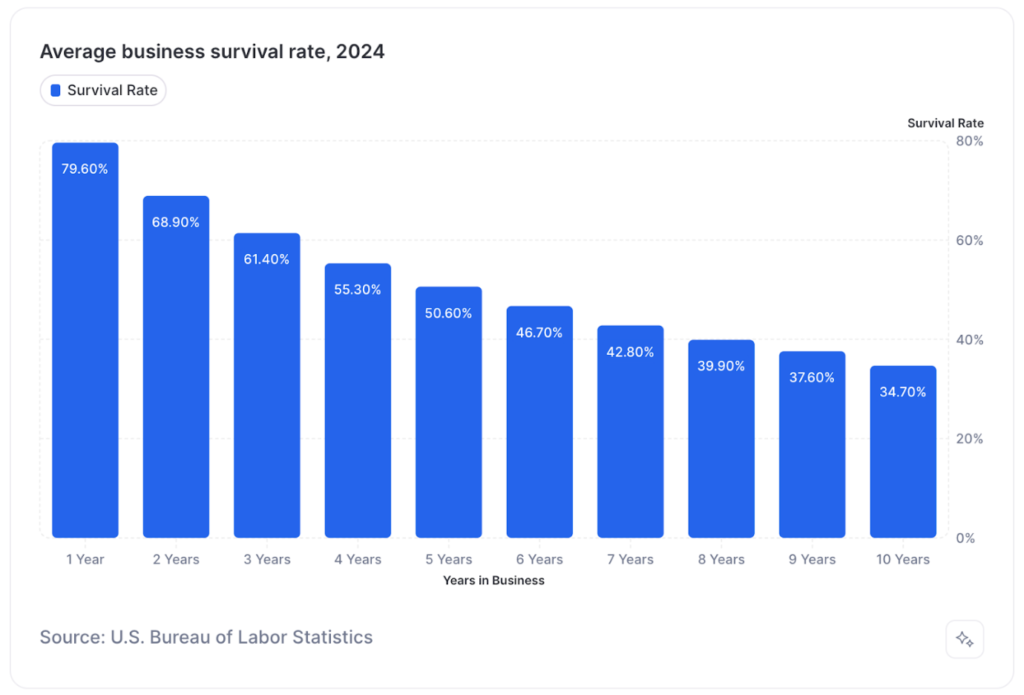
These services mitigate these risks from day one by ensuring that the entity is legally sound, properly registered, and aligned with the entrepreneur’s growth goals. The ROI here is risk reduction. Here is a summary of the rates of the survival of the small businesses according to the commerce institute.
DIY Formation vs. Professional Services
At first glance, DIY formation appears cheaper. For example, forming an LLC in Delaware requires a $110 state filing fee, with a $300 annual franchise tax regardless of revenue. These services typically charge $100–$500 in service fees on top of state costs.
However, DIY formation frequently leads to hidden expenses such as:
- Refiling incorrect documents
- Paying late penalties for missed compliance deadlines
- Hiring attorneys or accountants to fix preventable mistakes
Late filing penalties across U.S. states range from $50 to $400 per missed report, and prolonged non-compliance can result in administrative dissolution.
ROI insight: A one-time professional fee can prevent recurring penalties, reinstatement costs, and legal fees that easily exceed several thousand dollars.
Founder Focus Has Monetary Value
Time is one of the most overlooked ROI factors for new entrepreneurs. Studies show that small business owners spend 16–20 hours per week on administrative and compliance tasks, particularly during the early stages of a business.
Harvard-linked research tracking executive behaviour found that leaders spend over 50% of their working time on administrative coordination and internal processes, reducing strategic output and slowing growth. These Services streamline:
- Entity registration
- EIN acquisition
- Registered agent setup
- Initial compliance calendars
Reclaiming even 10 hours per week allows founders to focus on revenue-generating activities such as sales, customer acquisition, and fundraising.
Staying in Good Standing Protects Revenue
Almost all U.S. states require annual or biennial filings to maintain “good standing.” Missing these filings can result in:
- Loss of legal protections
- Inability to open bank accounts
- Barriers to licensing and contracts
- Administrative dissolution
These services typically include compliance tracking, deadline reminders, and registered agent services. According to compliance guides, reinstating a dissolved entity often costs more than forming a new one, excluding reputational damage and lost business opportunities.
Investor-Ready Business Structures
For startups planning to raise capital, entity structure is critical. A study analysing nearly 5,000 U.S. venture-backed startups found that virtually 100% of Series A companies were incorporated under Delaware law, primarily as C-Corporations.
Venture capital firms strongly prefer Delaware C-Corps because they offer:
- Predictable corporate law
- Ability to issue preferred stock
- Compatibility with institutional and foreign investors
These services ensure founders:
- Select the correct entity type early
- Avoid expensive conversions later
- Meet investor expectations from the outset
ROI insight: Proper formation can directly influence access to funding and company valuation.
Tax Optimization ROI and Exit Advantages
Incorrect entity selection can create long-term tax inefficiencies. LLCs, S-Corps, and C-Corps differ significantly in taxation, investor eligibility, and scalability.
Professional formation providers help entrepreneurs structure their businesses to preserve eligibility for benefits such as Qualified Small Business Stock (QSBS). Under Section 1202, QSBS can allow investors and founders to exclude up to $10 million in capital gains at exit if requirements are met.
Formation as a Growth Investment
Small businesses account for 99.9% of all U.S. businesses and employ nearly 46% of the U.S. workforce, highlighting the competitive environment new entrepreneurs face. In such a landscape.
Conclusion
When assessing The ROI of Professional Company Formation Services USA by Zari Financials LLC for New Entrepreneurs, the answer is clear:
- Lower legal and compliance risk
- Significant time savings
- Improved investor readiness
- Stronger tax and exit positioning
For new entrepreneurs, professional company formation services are not just a cost, they are a high-ROI strategic investment that supports sustainable growth, credibility, and long- term success.